Proudly Singaporean
Best Espresso Machines in Singapore
Kopi will always have its throne here. But somewhere between the work from home years and half of Singapore turning their kitchen counter into a mini cafe, espresso machines quietly became a household staple.
Scroll through Shopee right now and you’ll find hundreds of listings, thousands of reviews, and honestly, way too many confusing terms floating around.
Bar pressure, thermoblock, PID, thermocoil. None of it means much until you’re standing in front of your own machine at 7am wondering why your shot tastes burnt.
We get it. Buying an espresso machine in a country where kitchen counters are the size of a yoga mat is its own kind of puzzle.
So we picked up three of the most searched for espresso machines in Singapore, set them up in an actual HDB kitchen, and used them the way a real household would over two straight weeks.
We may not have the fancy TDS meters, but we’re just like you when it comes to groggy mornings and a deadline to catch the MRT.
Here’s what came out on top, what we’d skip, and what it actually costs you to own one versus just grabbing kopi downstairs.
How We Tested
Each machine got the same treatment back to back with the same beans and tap water. Every morning between 6.45am and 7.15am, we pulled shots the way most households here actually drink coffee.
One quick espresso before rushing out the door on weekdays, a slower latte or two on weekends when there’s time to fuss over the milk.
We paid attention to what matters in a Singapore kitchen specifically. How loud the pump ran, since a lot of us live with someone still asleep at 6.45am.
How much counter space each machine really ate up once the water tank and drip tray were attached. How the steam wand handled full cream UHT milk, because that’s what most fridges here stock and not the barista milk from the videos online.
And because our weather shows zero mercy, we tracked how each held up after a few humid days without a proper wipe down.
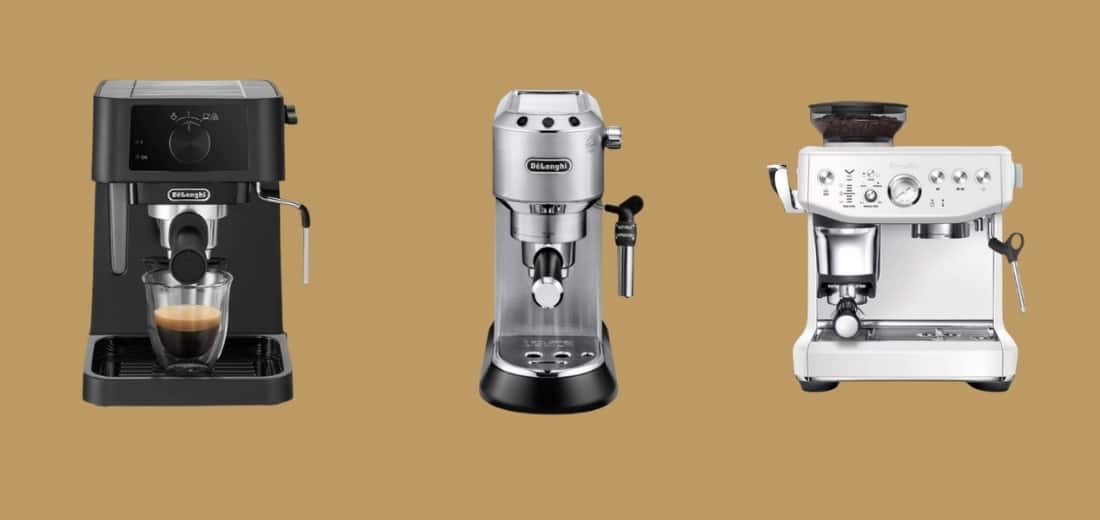
Three machines made the final cut.
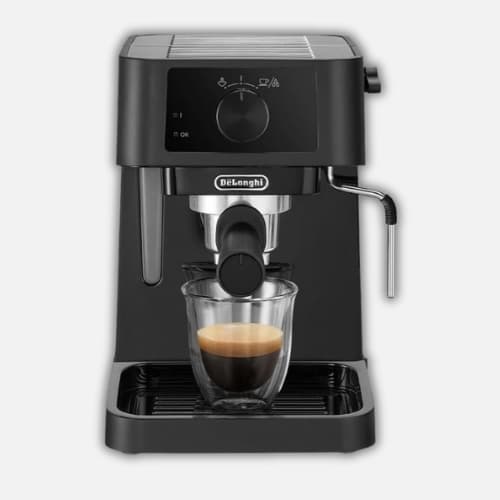
Best Overall: De’Longhi Stilosa EC230.BK
Pros
- Consistent pressure and heat up time, no fussing with settings
- Genuinely compact, fits most HDB counters with room to spare
- Removable water tank and drip tray make cleanup fast
- Cheapest of the three by a wide margin
Cons
- Manual steam wand takes practice before the foam looks right
- No built in grinder, you’re stuck buying pre ground beans or ESE pods
- Portafilter and drip tray feel a bit lightweight for daily heavy use
Key Specs
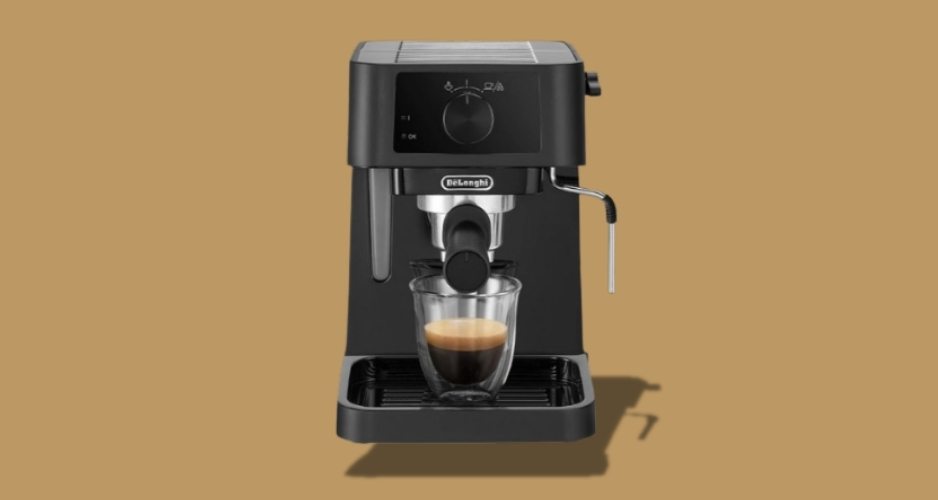
- Stainless steel boiler with 15 bar pump pressure
- 1L removable water tank with water level gauge
- Manual stainless steel steam wand for milk frothing
- Dual thermostat for separate coffee and milk temperatures
- Removable double drip tray, fits mugs up to 110mm tall
- Compact footprint at 205 x 343 x 285mm, roughly 4.3kg
Shopee reviewers circle back to the same points again and again. Buyers like how little space it takes on a small counter, and first time espresso drinkers mention they got a decent shot within a day or two of unboxing.
A handful wish the steam wand had a touch more power for thicker milk foam. For the full lineup of De’Longhi models we’ve put through testing, our De’Longhi Espresso Machine Singapore guide covers the rest of the range.
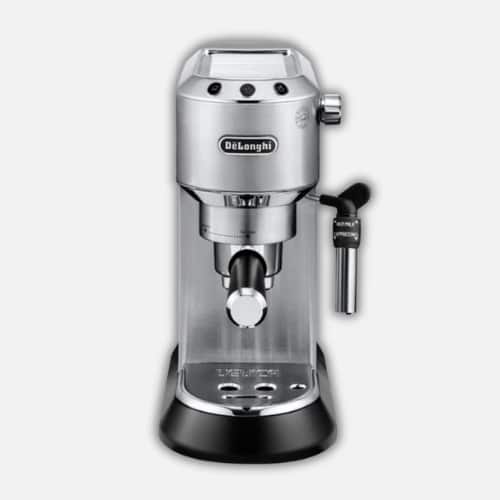
Best Compact: De’Longhi Dedica Pump EC685
Pros
- One of the slimmest machines on the market, ideal for narrow HDB counters
- Fast thermoblock heat up, ready to brew in about 40 seconds
- Adjustable cappuccino system gives more control over milk foam than a basic wand
- Works with both ground coffee and ESE pods
- Double drip tray accommodates taller cups and glasses
Cons
- Can’t pull a shot right after steaming milk, the machine needs a moment to cool down first
- Tight fit for two cups under the spout at the same time
- Some dripping after the shot finishes pouring
- Stainless steel body shows fingerprints and water spots easily
Key Specs
- Thermoblock heating, ready to brew in around 40 seconds
- 15 bar pump pressure
- Adjustable cappuccino system for manual milk frothing
- Compatible with ground coffee and ESE pods
- Removable double drip tray, fits taller cups and glasses
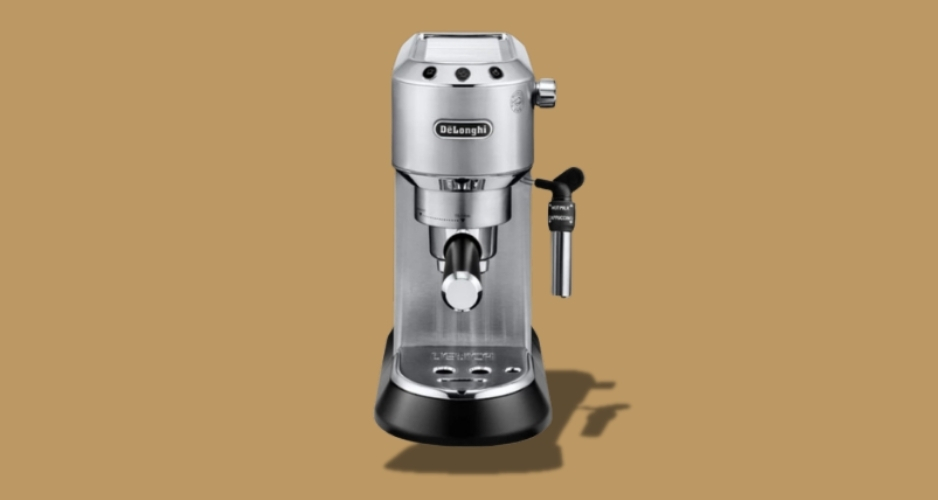
- Ultra slim 15cm wide stainless steel body
The thermoblock heating system gets it ready to brew in about 40 seconds, and the adjustable cappuccino system lets you dial in how much foam you want instead of guessing with a basic wand.
It also takes ESE pods on top of ground coffee, which is handy on the mornings you can’t be bothered to measure anything.
This is the pick for anyone whose kitchen has almost no spare counter to give up, but who still wants proper crema and real milk foam instead of a one button shortcut.
Shopee listings for this model consistently draw buyers comparing it against bulkier machines, with reviewers pointing out how easily it slots into a shared or rental kitchen without dominating the space.
The most common gripe is the smudge prone finish, so a microfibre cloth nearby is worth the habit. Browse more space saving picks in our Compact Espresso Machine Singapore guide.
Best Breville: Breville Barista Express BES870

Pros
- Fresh beans ground on demand, noticeably better tasting shots
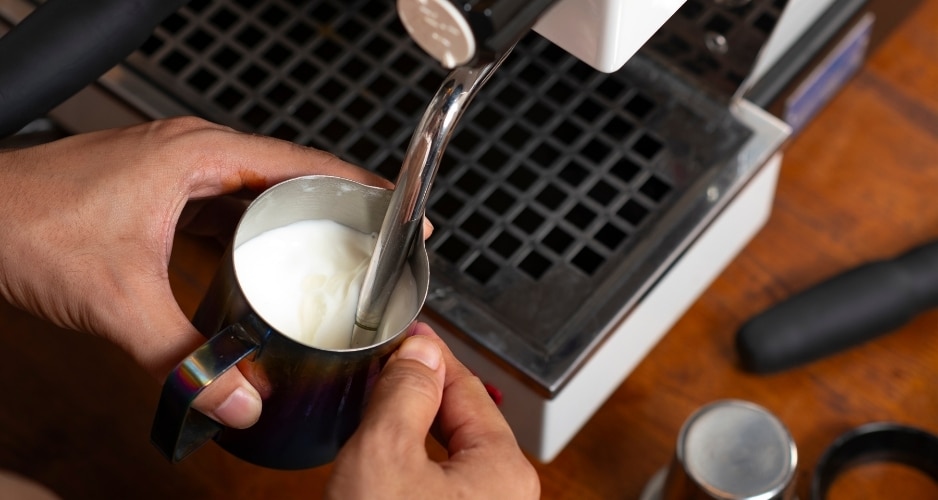
- Powerful steam wand capable of real latte art
- Digital temperature control means fewer inconsistent shots
- Feels genuinely durable, built for daily use over years
Cons
- Steepest learning curve of the three, expect a few bad shots early on
- Takes up the most counter space by far
- Highest upfront cost, nearly six times the De’Longhi
- Grinder hopper and burrs need regular cleaning on top of the usual maintenance
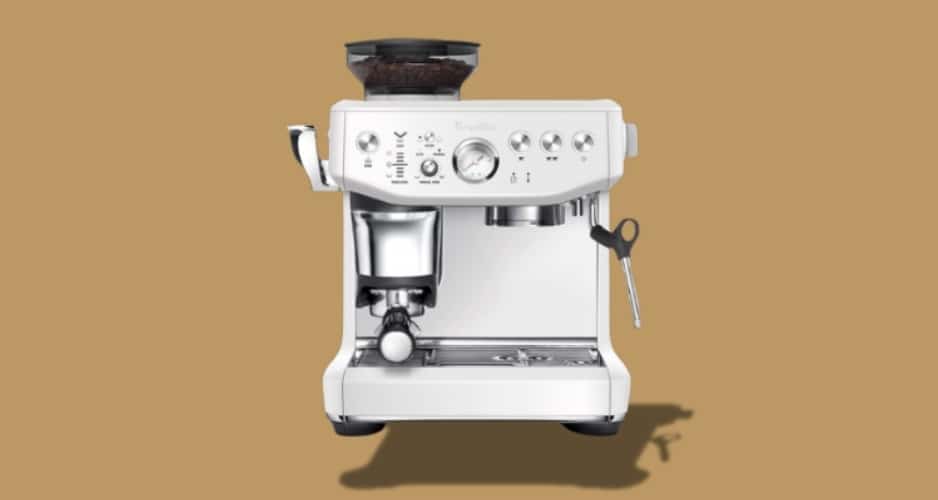
Key Specs
- Built in conical burr grinder
- 15 bar Italian pump
- ThermoCoil heating with digital PID temperature control
- 360 degree swivel steam wand
- 2L water tank
- Stainless steel body
Buyers describe it as the upgrade they didn’t know they needed, especially the ones who used to drop ten dollars a day at the cafe near their office.
A common thread across reviews is how much better the coffee tastes once the grind setting is dialled in properly, alongside the occasional comment that it took a week or two to stop pulling under extracted shots.
If you want espresso with zero learning curve, our Best Overall pick above is the safer bet. Curious about other Breville models we’ve tried, our Breville Espresso Machine Singapore guide rounds up the rest.
What It Actually Costs You Over Time
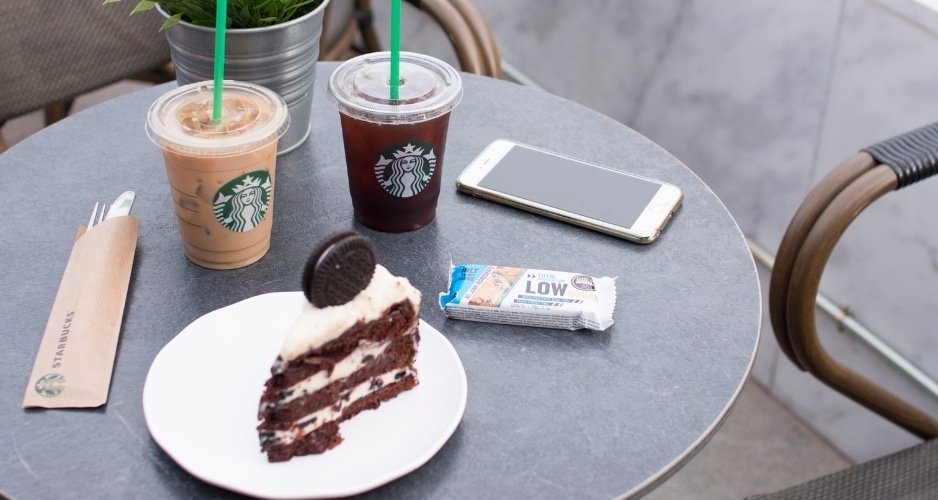
Here’s the part most people skip past when they’re comparing machines side by side, what you’re actually spending a year in, three years in, five years in.
We ran the numbers assuming one cup a day using the official Singapore RRP for the De’Longhi and Breville machines, and average local grocery costs for beans and milk.
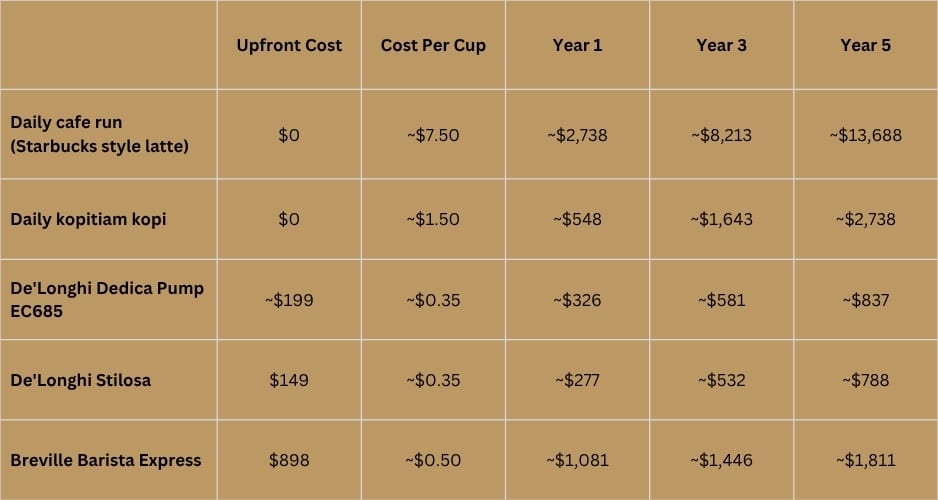
These are rounded estimates for illustration. Bean quality, promo pricing, and how many cups you actually make a day will change the numbers, but the pattern holds.
Even the priciest machine here beats a daily cafe habit within the first year, and every single one pays for itself against a daily kopitiam run by year three or four.
Before You Buy
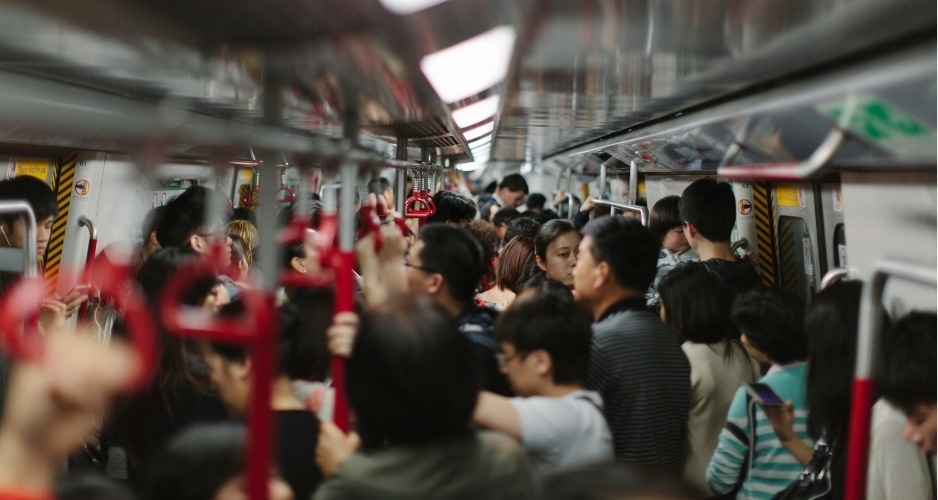
Measure your counter space first. HDB kitchens are unforgiving, and a machine that looks compact in product photos can eat up more room than expected once the tank and tray are attached.
Check the water tank capacity too if you’re brewing for more than one person a day, since nobody enjoys refilling mid pour on a rushed morning.
Look out for whether the Shopee listing is from an official brand store or an authorised local distributor, since that usually determines how smooth a repair goes if something breaks down the line.
And be honest with yourself about how often you’ll actually use the milk frother, because plenty of espresso machines gathering dust in Singapore kitchens right now were bought for lattes that never got made.
Whichever one you land on, you’ll come out ahead of a daily cafe run, and your kitchen gets to smell like one every single morning.

news via inbox
See our latest reviews of goods, conducted right here in Singapore.