Proudly Singaporean
Don’t Buy a Phillips Air Fryer Until You Read This (Especially in a Small HDB in Singapore)
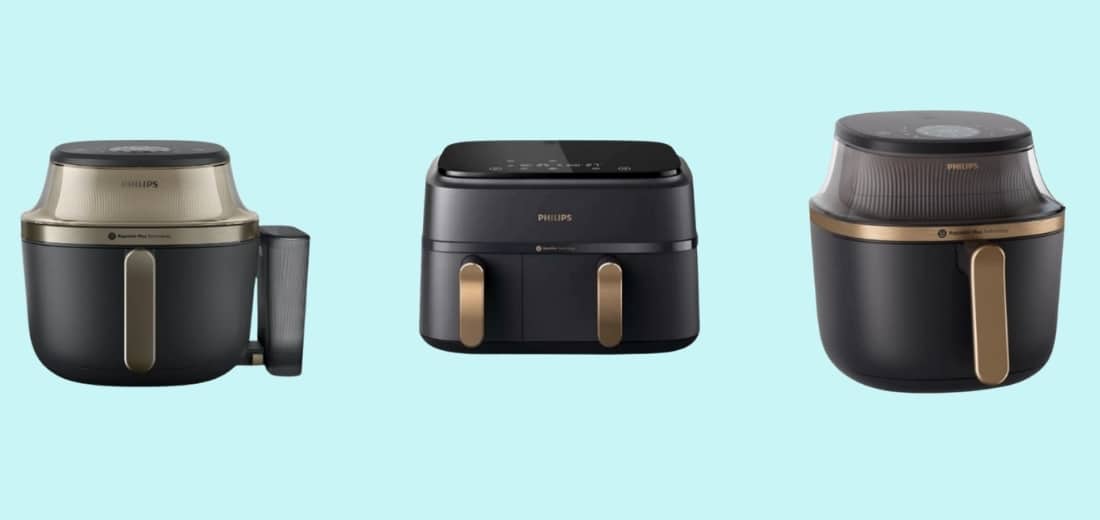
Walk into any BTO kitchen in Singapore and there’s a decent chance you’ll spot a Philips air fryer sitting on the counter, usually next to the rice cooker and a half-empty bottle of light soy sauce. It’s become that kind of appliance. Not flashy, just there, doing its job every single day.
Philips has been making kitchen appliances for decades, and their air fryers specifically built a reputation here because they solved a problem Singaporean households actually have.
We fry a lot. Fried chicken wings for dinner, curry puffs reheated for breakfast, sambal-marinated anything on a Sunday.
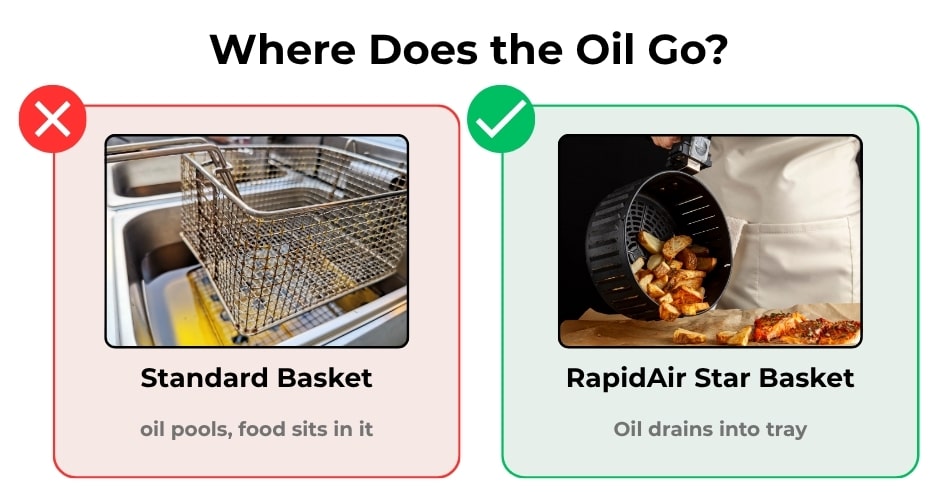
An air fryer that handles oil properly matters more here than in most other countries, and Philips leaned into that with their star-shaped RapidAir basket design, which pushes hot air around the food fast enough to crisp it up while draining excess oil straight into the tray below.
That’s the actual selling point. Not the brand name. The mechanism.
The Grease Problem Nobody Talks About Enough
Singapore kitchens deal with two things most other places don’t worry about as much: humidity and grease buildup from frequent frying. Leave an oily pan out for even a few hours in our weather and you’ll smell it.
Philips addressed this with PFAS-free ceramic coating on their newer baskets, which stays non-stick longer and doesn’t hold onto smells the way older Teflon coatings did.
We’ve used a basic non-Philips air fryer before switching, and the difference in cleanup alone justified the upgrade. Chicken wings marinated in sambal or belacan leave behind a mess that regular non-stick coating struggles with after a few uses.
The ceramic coating on current Philips models handles that better, and most baskets are dishwasher safe now, which honestly should be a baseline for any appliance sold in a country where people work long hours and don’t have time to hand scrub a fryer basket every night.
Do You Actually Need a Philips Air Fryer?

Fair question. You don’t strictly need this brand. While Philips is a household favorite, plenty of alternative brands exist that might better fit your budget or counter space. You can check out our guide to the Best Airfryers in Singapore to compare all top options.
That said, cheaper air fryers exist and some of them work fine for basic tasks like reheating fries or making toast crispy.
Where Philips earns its price tag is consistency. Their RapidAir Plus system circulates air more evenly than budget models, so you don’t get that annoying result where one side of your chicken is done and the other side is still pale.
For Singaporean cooking specifically, where a lot of dishes involve marinated proteins with sugar content (think char siew, satay, sambal chicken), even heat distribution matters because sugary marinades burn fast under uneven or overly aggressive heat.
Cheaper machines tend to scorch the edges before the inside cooks through. Philips models let you dial temperature down slightly and still get a proper crust without charring.
There’s also the warranty and local support angle, which people underestimate until their appliance breaks. Philips has an established service presence in Singapore, and their products sold through official channels come with proper local warranty coverage.
That matters a lot more than it sounds when you’re troubleshooting a dead appliance six months after purchase and trying to figure out who to call.
Capacity Is the Setting Everyone Gets Wrong
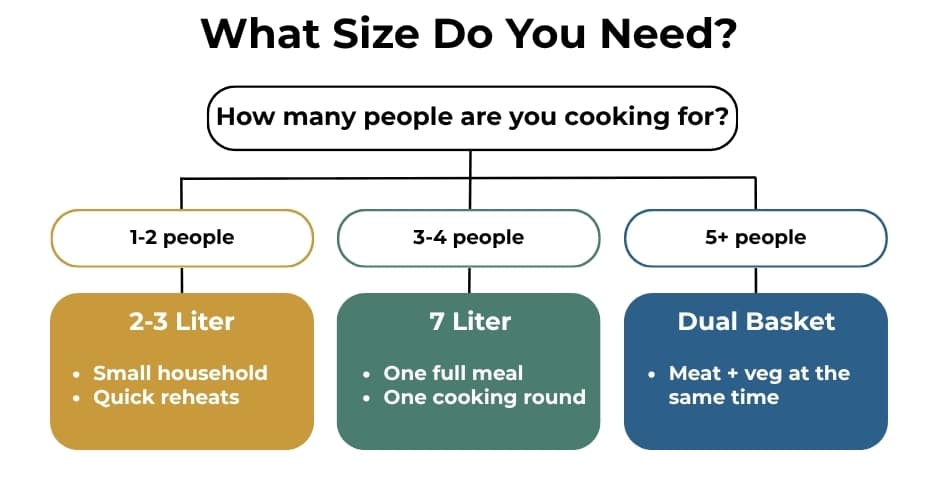
This is probably the single biggest mistake buyers make. People shop for air fryers the way they’d shop for a toaster, without thinking about how many people they’re actually cooking for.
A 2 to 3 liter basket sounds fine until you’re trying to fit a whole chicken thigh batch for four people and realize you need three separate cooking rounds just for dinner.
For most Singapore households, especially families living in 4 or 5 room HDB flats, something in the 7 liter range hits the right balance. Big enough to cook a proper meal in one go, not so bulky that it eats your entire counter.
If you regularly cook for a bigger household or like prepping multiple dishes at once (meat in one batch, vegetables or fries in another), a dual basket setup changes the game.
You stop doing the annoying shuffle where the chicken finishes first and sits getting cold while the fries catch up.
Functions You’ll Actually Use Versus Marketing Fluff
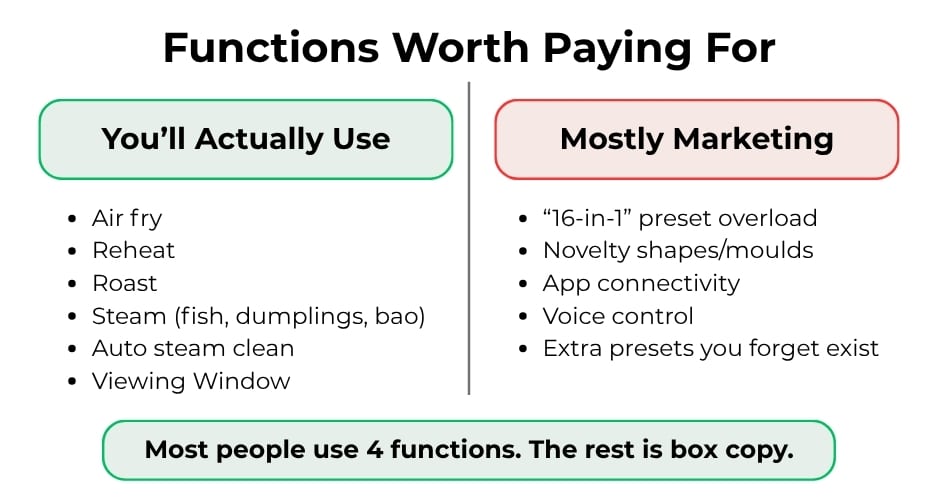
Most air fryers today advertise anywhere from 8 to 16 cooking functions. Realistically, you’ll use about four of them regularly. Air fry, roast, reheat, and maybe bake if you’re into that.
What’s worth paying attention to instead is whether the machine has genuinely useful extras for how Singaporeans cook day to day. Steam function is one of those.
A lot of local dishes benefit from moisture retention, steamed fish, dumplings, bao, and having that built into your air fryer means you’re not buying a separate steamer just to handle those dishes
Auto steam clean is another one that sounds gimmicky until you’ve scrubbed baked-on chili oil off a basket by hand at 10pm.
Digital touchscreen presets are nice to have but not a dealbreaker. What actually saves time is a viewing window on top of the unit, letting you check on food without opening the drawer and losing heat mid cycle.
What to Physically Check Before You Buy
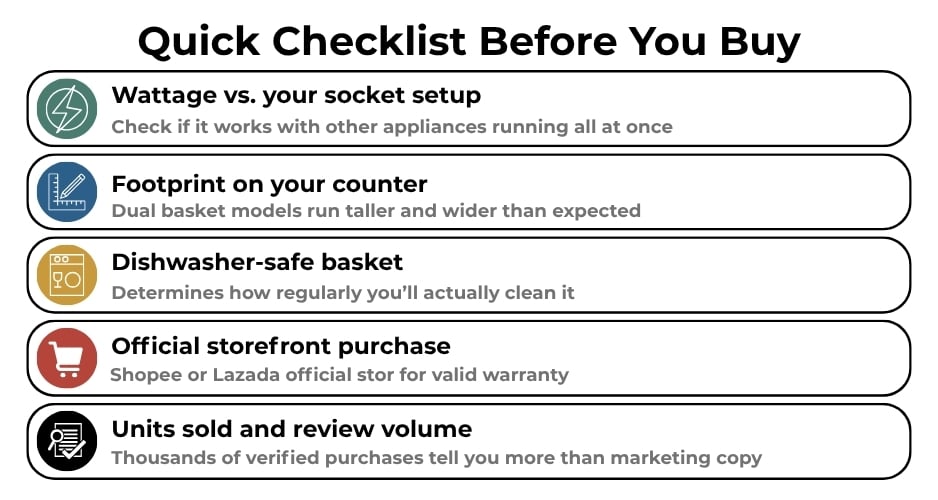
A few practical things worth confirming before you commit to any model.
- Confirm the wattage and whether your BTO kitchen socket setup can handle it comfortably alongside other appliances running at the same time
- Check the actual footprint dimensions against your counter space, some of the bigger dual basket models are taller and wider than people expect
- Look at whether the basket and accessories are dishwasher safe, this affects how often you’ll actually clean it properly
- Buy through the brand’s official storefront (Shopee or Lazada) to make sure you’re covered under proper local warranty
- Check current unit sold numbers and review volume on the listing itself, a model with thousands of verified purchases and consistent ratings tells you more than the marketing copy does
With all that in mind, here are the three Philips air fryers actually worth your money right now, based on different household needs.
Our Top 3 Phillip Air Fryer Picks
Best Overall: Philips 3000 Series 16-in-1 (NA342/09, 7.2L)
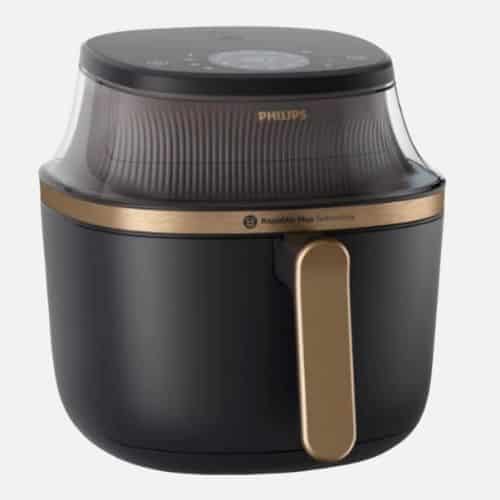
Key Specifications
- 7.2L capacity, suitable for 3 to 5 person households
- 16 cooking modes with 12 built-in presets
- Digital touchscreen control
- Dishwasher-safe non-stick basket
- 2000W power draw
Why We Picked It
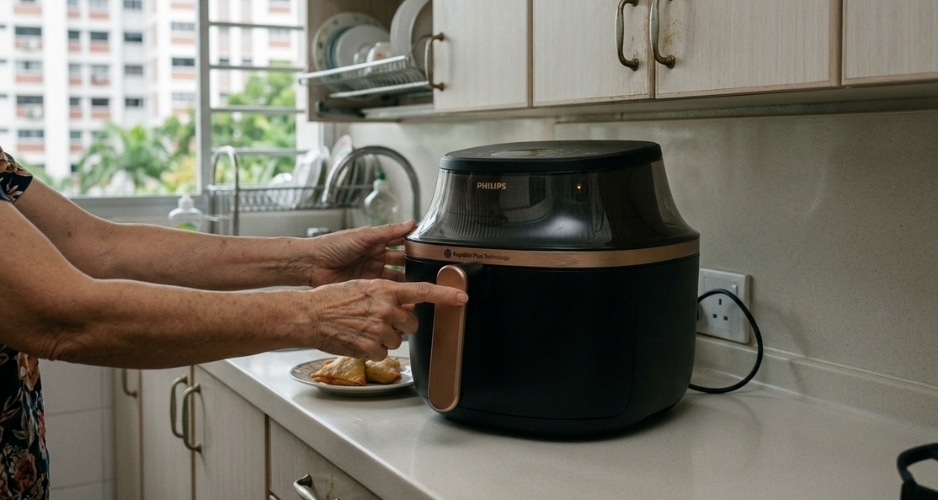
It’s the sweet spot between capacity, price, and everyday usability. We’ve cooked full HDB dinners in it without stacking food or running double batches, and the crisping result on chicken wings and fries stays consistent even with heavier marinades.
What Singaporeans Say
Reviews on Amazon.sg and Shopee sit around 4.4 out of 5 across a large sample size, with buyers repeatedly noting the even cooking result and how quickly the machine preheats compared to older models.
Things to Consider
Single basket only, so you can’t cook two separate dishes simultaneously without one finishing earlier. It’s also fairly heavy at around 5.2kg, so factor in where it’ll permanently live on your counter.
Best Premium: Philips 3-in-1 Steam 5000 Series (NA543/00, 7.2L)
Key Specifications
- 7.2L capacity, same footprint as the NA342 base model
- 3 core modes plus 21 total cook settings
- Built-in detachable water tank for steaming
- Auto SteamClean function for easier maintenance
- Up to 70% less energy use versus a conventional oven
Why We Picked It
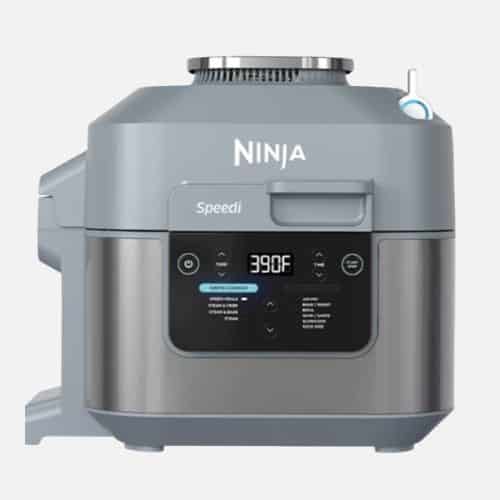
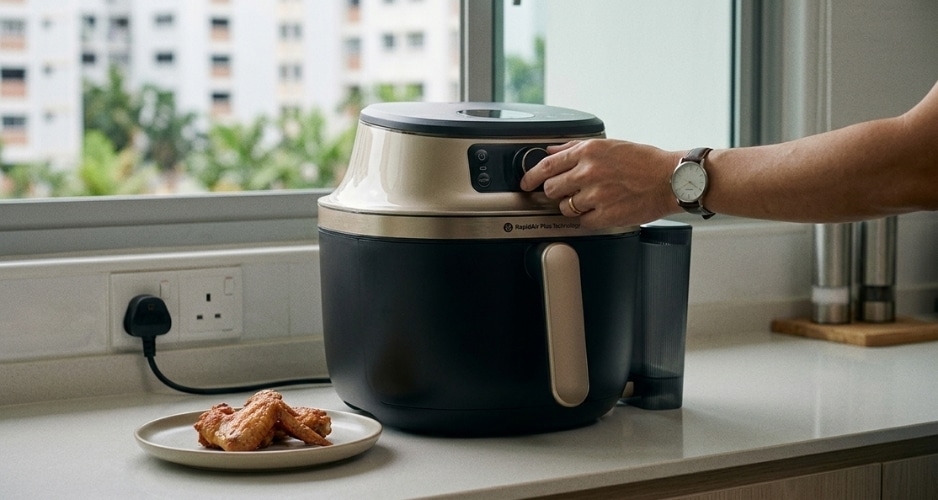
The steam function genuinely earns its keep for local cooking. Steaming chicken before crisping the skin keeps the meat from drying out, and reheating rice-based dishes without turning them tough is a small but real quality of life upgrade.
What Singaporeans Say
Buyers on Shopee consistently highlight the steam function specifically, describing vegetables coming out noticeably more tender than standard air fry only models, alongside praise for how quiet the steaming cycle runs.
Things to Consider
It’s the bulkiest of the three and needs the water tank refilled for steam mode, plus a longer drain cycle afterward. If you rarely steam food, you’re paying a premium for a function you won’t use often.
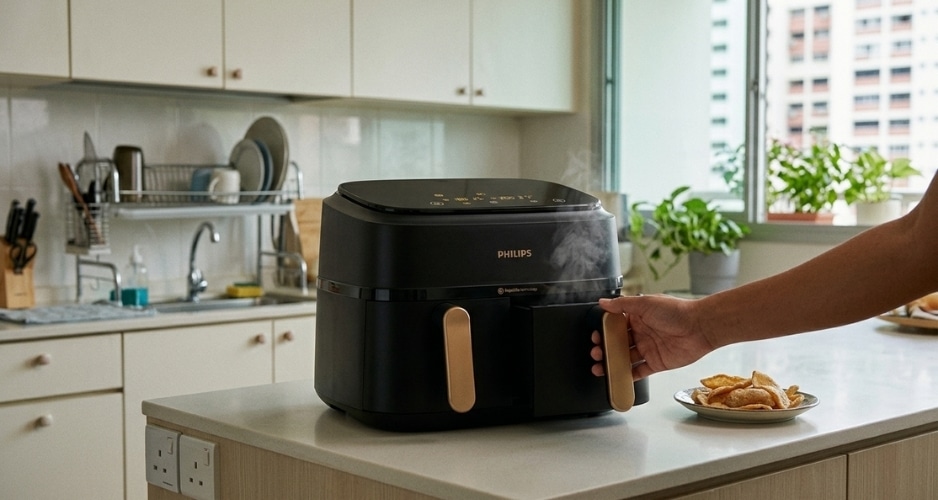
Best for Big Families: Philips 3000 Series Dual Basket (NA352/00, 9L)
Key Specifications
- 9L total capacity across two baskets (roughly 5L and 4L)
- 8-in-1 function set with 8 presets
- Sync Finish and Copy Settings shortcuts
- Both baskets dishwasher safe
- 2750W power draw
Why We Picked It
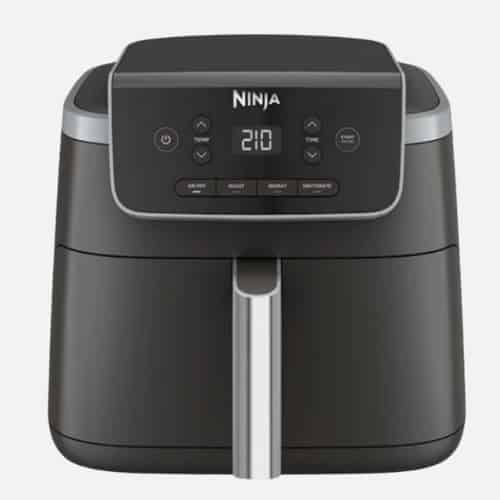
For households juggling multiple dishes on a tight weeknight schedule, this cuts actual hands-on cooking time significantly. We ran marinated chicken in one basket and frozen fries in the other, and both finished golden at the same time without any babysitting.
What Singaporeans Say
Parents specifically call out being able to prep a full meal without running two separate appliances, and overall ratings sit around 4.3 out of 5 with reviewers highlighting the energy savings from smaller dual chambers versus one large one.
Things to Consider
It’s the priciest of the three and the tallest footprint wise, so measure your counter space first. Delicate items can shift between baskets if not seated properly, so it’s not ideal for flimsy foods like thin pancakes.
Final Thoughts

If you only need one solid air fryer that handles everyday Singaporean cooking well, the NA342/09 covers it without overspending.
Go for the NA543/00 if steaming is something you’ll genuinely use often, not just something that sounds nice on paper.
And if your household regularly cooks multiple dishes at once and hates the cold-food-waiting-on-hot-food problem, the dual basket NA352/00 pays for itself in convenience alone.
All three are worth buying through Philips’s official Shopee storefront specifically, both for authenticity and proper local warranty coverage.

news via inbox
See our latest reviews of goods, conducted right here in Singapore.